
Pain during stool passage that reliably worsens before or during bleeding deserves more attention than the assumption that it is simply constipation, IBS or a normal period change. You will learn how to recognise the pattern, record useful evidence, identify urgent warning signs and prepare for a specialist assessment.
Key takeaways
- Deep rectal pain before, during, or after periods can signal bowel endometriosis.
- Record pain timing, bowel changes, bleeding, sex-related pain, and cycle dates.
- Seek urgent care for severe worsening pain, vomiting, fever, or inability to pass stool.
- Ask how bowel involvement would change imaging, surgery, fertility, and treatment choices.
What painful bowel movements during a period can feel like
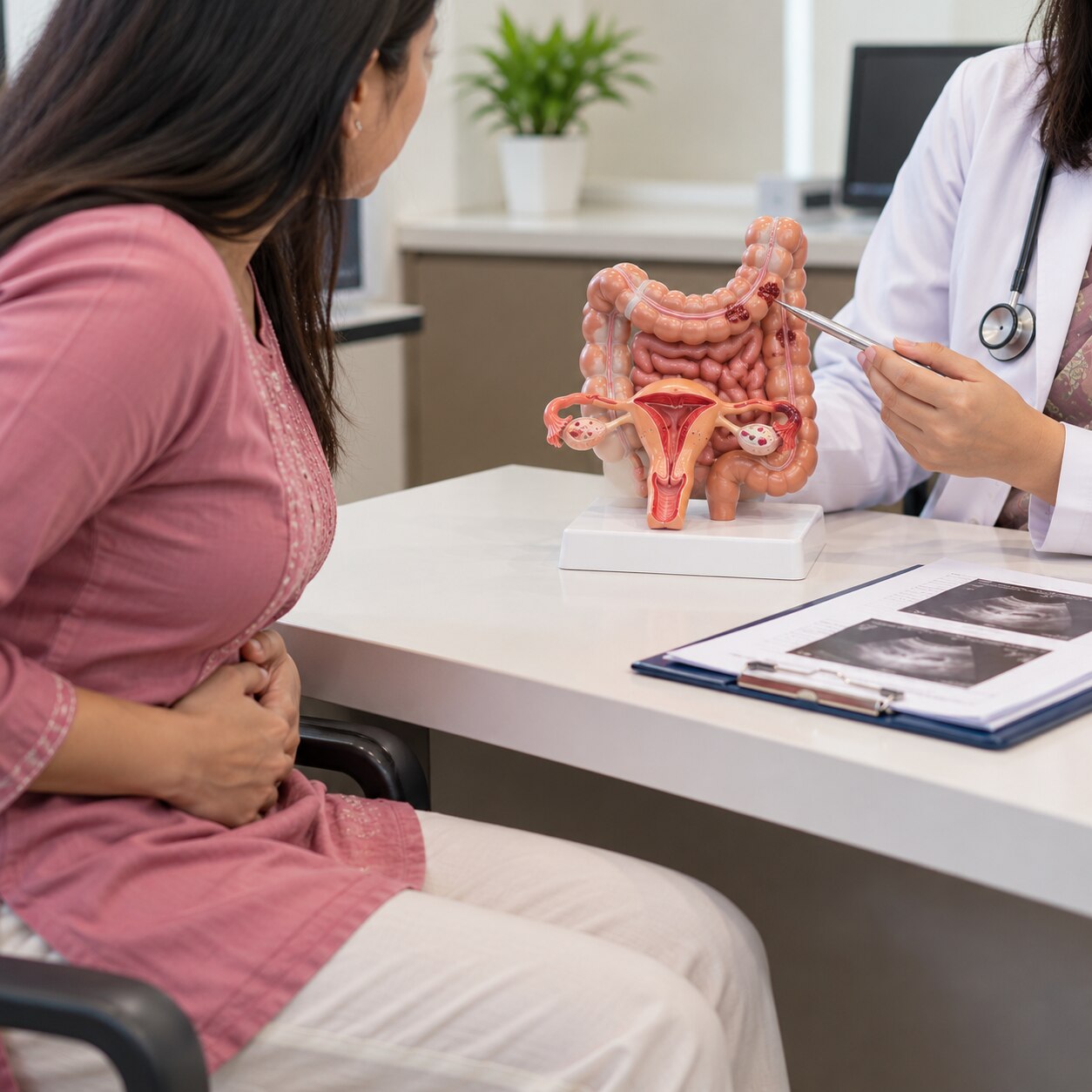
Painful bowel movements during periods can feel like a sharp, pulling or burning pain as stool passes, but endometriosis-related pain is often deeper. Dyschezia may feel like deep rectal pain, pressure or cramping low in the pelvis, with discomfort starting before the bowel movement and lingering afterwards.
The pattern becomes more concerning for bowel or deep pelvic endometriosis when:
- Pain during defecation begins or intensifies in the days before bleeding and eases after the period.
- The pain feels deep rather than like surface soreness at the anus.
- Cramping continues after you empty your bowel or radiates to the vagina, tailbone or lower back.
- You experience the same pattern across several cycles, even if bowel movements are otherwise normal.
- Constipation, loose stools, painful gas or a feeling of incomplete emptying appears around menstruation.
A symptom diary can show the cycle link more clearly than memory: record the first day of bleeding, bowel-movement pain from 0 to 10, stool changes and how long pain lasts. This pattern raises suspicion but does not prove bowel endometriosis.
Anal fissures, haemorrhoids, constipation, inflammatory bowel disease, irritable bowel syndrome and pelvic-floor dysfunction can cause similar symptoms, and a normal pelvic examination does not exclude deep disease.
Other bowel and sexual symptoms to look for
A cluster that returns before or during bleeding is more informative than one isolated symptom. Possible bowel endometriosis signs include cyclical constipation, cyclical diarrhoea, alternating stool patterns, painful bloating, excess gas, bowel urgency and a feeling that you cannot fully empty your rectum.
| Symptom | What to notice | Why it matters |
|---|---|---|
| Constipation or diarrhoea | Starts in the days before bleeding and eases afterwards | A repeating cycle points toward hormone-linked pelvic inflammation |
| Rectal symptoms | Deep pressure, urgency, incomplete evacuation or pain after passing stool | Posterior pelvic disease can irritate the rectum without blocking it |
| Rectal bleeding | Blood on or in stool during periods | This is uncommon, but recurring menstrual timing needs assessment |
| Sexual pain | Pain with deep penetration, especially deep vaginal or rectal pain | Tender tissue behind the uterus or near the bowel can make penetration painful |
Symptoms can cycle even when a lesion does not visibly enlarge each month. Painful bloating, bowel urgency or rectal pressure outside menstruation does not rule out a cyclical pelvic problem. Fissures, haemorrhoids, IBS and pelvic-floor dysfunction can cause similar symptoms, so this pattern raises suspicion rather than proving the cause.
How bowel endometriosis symptoms differ from other causes
Pain that is deep, recurrent and clearly worse in the days before or during bleeding raises more concern for bowel endometriosis than a one-off painful stool. The pattern is not diagnostic: constipation, pelvic-floor dysfunction and several bowel or anal conditions can feel similar.
Bowel endometriosis vs IBS becomes more useful when you track timing, bleeding and symptoms between periods.
| Cause | Pattern that points toward it | Clues against bowel endometriosis |
|---|---|---|
| Bowel endometriosis | Deep rectal pain during or after stool, cyclical constipation or diarrhoea, painful bloating, urgency or incomplete emptying; symptoms may radiate to the vagina or lower back | A symptom pattern that never changes with the menstrual cycle |
| IBS | Recurrent abdominal pain linked to defecation and altered stool frequency or form; stress or food can trigger flares | Rectal bleeding, fever, weight loss or pain reliably centred around menstruation |
| Inflammatory bowel disease | Ongoing diarrhoea, blood or mucus, urgency, night-time stools, fatigue, weight loss or fever | Symptoms limited to a few menstrual days with no inflammation signs |
| Haemorrhoids | Bright-red blood, itching, a lump or tenderness at the anus; thrombosed haemorrhoids cause a sudden painful lump | Deep cyclical pelvic pain without anal findings |
| Anal fissure | Sharp, tearing pain during and after a hard stool, with a small streak of bright-red blood | Repeated pain despite soft stools, especially around periods |
| Infection | Sudden diarrhoea, vomiting, fever, sick contacts or recent travel | Predictable recurrence each cycle |
| Ordinary period-related bowel change | Mild cramps, looser stools or urgency around bleeding that settle within a few days | Severe pain, rectal bleeding or symptoms between periods |
A normal colonoscopy does not exclude bowel endometriosis because lesions often sit outside the bowel lining. Persistent or cyclical symptoms need assessment rather than an IBS label alone.
What to record and which symptoms need urgent care
Track at least two or three cycles in an endometriosis symptom tracker. Mark the first day of bleeding, stool frequency and consistency, pain from 0 to 10, rectal bleeding during periods, urinary symptoms, medicines taken, and missed work or activities.
Note whether pain occurs before, during, or after a bowel movement and whether it continues outside menstruation.
Record patterns rather than isolated bad days:
- Constipation, diarrhoea, alternating bowel habits, urgency, incomplete evacuation, painful gas, bloating, and pain during or after defecation
- The timing and amount of blood, including whether it appears on toilet paper, coats the stool, or mixes into it
- Any change from your usual cycle, especially symptoms that intensify over successive months
Use this comparison to decide how quickly to seek help:
| Pattern | What it may indicate | Action |
|---|---|---|
| Cyclical pain without severe deterioration | A recurring pelvic or bowel-related pattern needing assessment | Arrange a clinical review |
| Severe or worsening pain with vomiting, distension, or inability to pass stool or gas | Possible bowel obstruction symptoms | Seek emergency medical assessment |
| Fever, fainting, substantial rectal bleeding, or black stools | Possible infection, significant bleeding, or another acute gastrointestinal problem | Go to emergency care immediately |
Do not attribute these warning signs to menstruation alone.
When to arrange an assessment and what to ask
Arrange an assessment when bowel pain recurs across menstrual cycles, is strongest before or during bleeding, or disrupts work, sleep, sex or eating. Book sooner for persistent constipation, diarrhoea, urgency, incomplete evacuation or rectal bleeding, even if IBS has already been diagnosed.
A clinician will review your cycle diary, previous scans, bowel diagnoses, medicines, pregnancy or fertility plans, and the effect on daily activities. They may examine your abdomen and pelvis for tenderness, restricted movement or masses, and offer a vaginal or rectal examination when appropriate.
Ask what each part of the assessment is intended to answer:
- Can an experienced operator perform a transvaginal ultrasound to map deep disease and assess the bowel, ureters and pelvic organs?
- Would a pelvic MRI add information about bowel-wall involvement, disease extent or an operation’s complexity?
- If surgery is possible, will the plan include a colorectal surgeon, and could a urologist be needed?
- Would colonoscopy investigate bleeding or suspected narrowing? A normal result does not exclude endometriosis outside the bowel lining.
- What other causes, including fissure, haemorrhoids, inflammatory bowel disease, infection or pelvic-floor dysfunction, need testing?
A normal ultrasound or MRI does not fully exclude superficial endometriosis, so ask how the result fits your symptoms. When choosing an Endometriosis Surgeon in Pune, confirm who reviews the images and whether colorectal support is arranged before surgery rather than only after unexpected findings.
What treatment decisions depend on bowel involvement
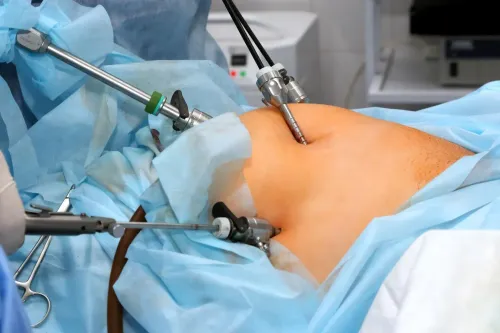
Hormonal treatment for bowel endometriosis aims to suppress cycling inflammation and pain; it does not remove a fixed bowel nodule or reliably reverse narrowing. Surgery is considered when symptoms persist despite medication, disease obstructs the bowel, or anatomy and fertility plans make removal appropriate.
| Option | Main purpose | Key trade-off |
|---|---|---|
| Hormonal treatment | Control hormone-responsive pain without an operation | Symptoms can return after stopping; narrowing remains |
| Shaving | Remove disease from the bowel surface or outer muscular layer | Less bowel removal, but deep disease may remain |
| Disc excision | Remove a full-thickness circular bowel lesion and close the defect | More complete local removal, with risks of leakage or altered bowel function |
| Segmental bowel resection | Remove a longer diseased bowel segment and reconnect the ends | Suits extensive narrowing, but brings greater surgical and recovery demands |
Mapping matters because lesions grow inward from the outside, and rectal or sigmoid disease can sit near the ureters. Expert transvaginal ultrasound or pelvic MRI can show depth, length and narrowing, allowing a colorectal surgeon and, when needed, a urologist to plan the operation rather than discover unexpected disease during it.
Frequently asked questions
What can painful bowel movements during a period feel like?
Endometriosis-related dyschezia can feel like deep rectal pain, pressure, pulling, burning, or pelvic cramping. Pain may begin before stool passes and continue afterwards.
What other symptoms can suggest bowel endometriosis?
Look for constipation, diarrhoea, painful straining, rectal bleeding during periods, bloating, deep pain during sex, and pelvic pain linked to your cycle.
How can bowel endometriosis symptoms differ from other causes?
A repeated cycle-linked pattern, especially deep pain with bowel movements or sex, raises suspicion. Constipation, haemorrhoids, irritable bowel syndrome, infections, and inflammatory bowel disease can cause similar symptoms, so assessment is needed.
When should you seek urgent care for these symptoms?
Seek urgent care for severe or rapidly worsening pain, repeated vomiting, fever, fainting, heavy bleeding, a swollen abdomen, or inability to pass stool or gas.
What should you ask during an endometriosis assessment?
Ask whether your symptoms suggest bowel involvement, which imaging is appropriate, whether a colorectal specialist is needed, and how treatment could affect bowel function, fertility, and future surgery.