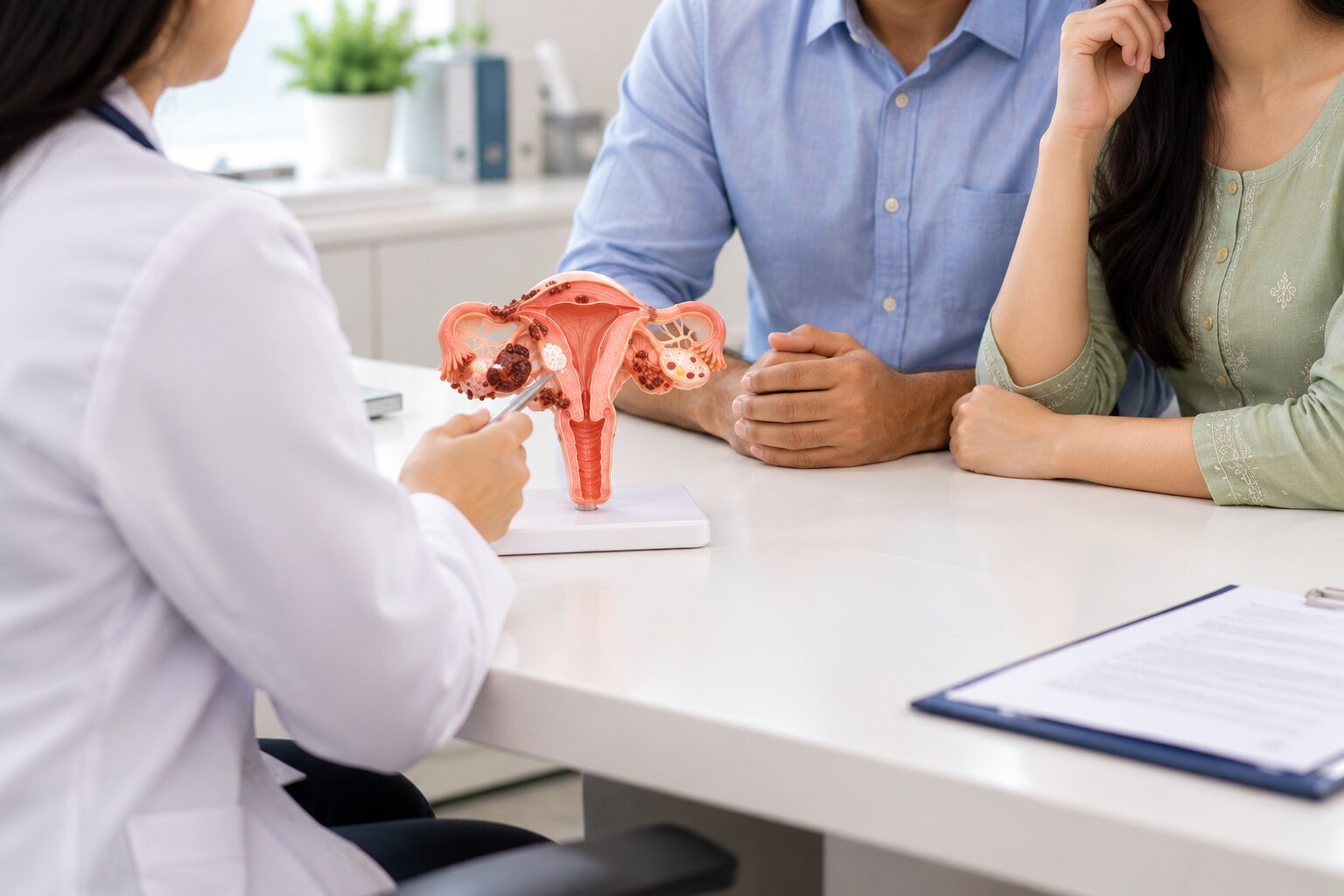
You do not always need to try for a full year before asking for fertility help, especially when endometriosis, ovarian disease, tubal damage, or age could affect the timeline. You will be able to identify when evaluation is appropriate, prepare for the first appointment, understand the main tests, and compare treatment routes without assuming that surgery is automatically the best next step.
Key takeaways
- Seek evaluation immediately for known infertility factors or suspected endometriosis.
- Bring cycle records, prior scans, surgery reports, and fertility treatment history.
- A normal scan does not rule out endometriosis-related fertility problems.
- Choose observation, fertility treatment, or surgery according to age, tests, and timeline.
When should you seek fertility evaluation with endometriosis?
Do not automatically keep trying for 12 months if endometriosis is known or suspected. Endometriosis and infertility assessment is appropriate immediately when you have a known infertility factor, including blocked or damaged tubes, reduced ovarian reserve, irregular or absent periods, or a partner-related fertility concern.
1. Arrange a fertility-focused consultation before trying if you have a known endometrioma, previous endometriosis surgery, severe or worsening symptoms, or any factor that could reduce fertility. This gives you time to discuss ovarian reserve, tubal function, semen factors, and fertility preservation.
2. Use the age-based thresholds if no immediate risk factor is present: an age 35 fertility evaluation follows 6 months of trying at ages 35 to 39. An age 40 fertility evaluation should begin without delay at age 40 or older.
3. Under age 35, seek assessment after 12 months of regular unprotected intercourse when no risk factor is present. Do not wait if symptoms or medical history already suggest infertility.
Seek urgent specialist review rather than a routine fertility appointment for cyclical rectal bleeding, blood in the urine that follows a menstrual pattern, flank pain, hydronephrosis, severe bowel symptoms, or a rapidly enlarging or atypical ovarian mass. These signs can indicate bowel, bladder, ureter, or ovarian involvement requiring assessment of organ function and anatomy.
What should you bring and what tests might be offered?
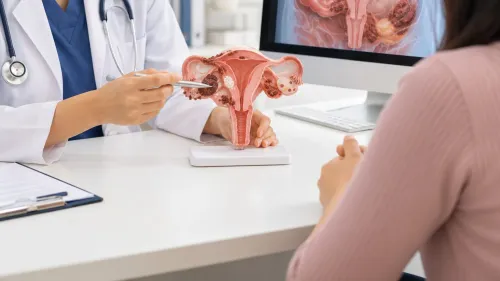
Bring a fertility consultation checklist, not just your latest scan. The first visit is more useful when the clinician can see your symptoms, treatment history, fertility goals, and time available for trying.
- Record cycle dates, regularity, bleeding pattern, and pain location, severity, and timing.
- Note bowel or bladder symptoms, including pain with bowel movements, urinary pain, or cyclical bleeding.
- Bring prior scans, operation dates, operative reports, medication history, and details of previous pregnancy attempts.
- Write your family-building timeline, including whether you hope for one child or more and when you want pregnancy.
Ask whether tubal disease, ovarian surgery, or another fertility factor changes the treatment order. Also ask about time limits, fertility preservation, and whether an operation could reduce ovarian reserve.
Testing usually examines both partners and several parts of reproduction:
- Semen analysis
- Ovulation assessment
- Antral follicle count by ultrasound
- Anti-Müllerian hormone testing
- Uterine assessment
- Tubal patency testing with hysterosalpingography or HyCoSy
AMH and antral follicle count estimate egg supply and help predict response to ovarian stimulation. They do not directly measure egg quality or predict whether natural conception will occur. A low AMH is not proof that pregnancy is impossible, but it deserves discussion alongside age, symptoms, scan findings, and your family-building timeline.
How can endometriosis interfere with conception, even when a scan is normal?
Endometriosis fertility mechanisms are not limited to visible implants. Inflammation can create adhesions that tether the ovary, tube, uterus, or bowel, distorting pelvic anatomy and restricting the tube’s ability to pick up and move an egg. The adhesions and fertility connection can make it harder for egg and sperm to meet, even when ovulation occurs.
An endometrioma or disease within the ovary can disrupt ovulation, damage ovarian tissue, or reduce the number of recruitable eggs; this is the endometrioma and ovarian reserve concern.
Fertility assessment must also consider problems that lesion removal will not correct:
- Blocked or damaged fallopian tubes
- Uterine abnormalities
- Ovulation disorders
- Semen-related factors
A normal ultrasound does not exclude superficial endometriosis; MRI can miss it too. This is why normal ultrasound endometriosis findings should not end evaluation when pain, infertility, or examination findings remain suggestive. Imaging remains valuable for identifying endometriomas and deep disease involving the bowel, bladder, ureter, or other organs.
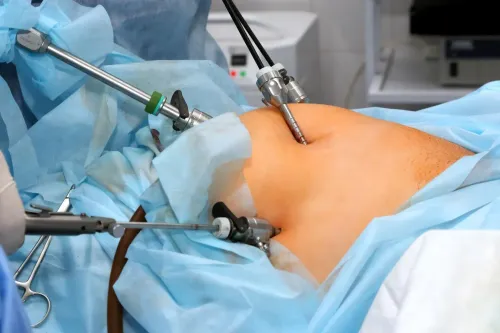
Laparoscopy is not automatically required to establish the diagnosis. If imaging is normal or unsuitable but clinical suspicion remains, a specialist may consider it after discussing the risks and alternatives. Persistent symptoms and examination findings should guide referral rather than being dismissed after a negative scan.
Which fertility route fits your age, test results, and timeline?
Age, ovarian reserve, tubal condition, semen results, disease severity, and time trying determine whether to keep trying or move to treatment. Expectant management and timed intercourse cost less and avoid procedures, but they can consume valuable time when age, low reserve, damaged tubes, or severe disease narrows the window.
| Option | Main trade-off | When it fits |
|---|---|---|
| Expectant management | No procedure or medication, but time passes | Younger age, reassuring tests, usable tubes, and a short duration of trying |
| Timed intercourse | Low cost, but limited benefit from timing alone when another factor exists | Regular ovulation and no major tubal, ovarian, or semen problem |
| Ovulation induction with IUI | Adds medication and monitoring; requires usable tubes and suitable semen | Ovulatory difficulty or unexplained infertility with adequate ovarian reserve |
| IVF and endometriosis | More invasive and costly, but bypasses damaged tubes | Older age, low reserve, longer trying, tubal disease, or multiple fertility factors |
| Egg freezing | Preserves options, not a guaranteed future baby | Extensive ovarian disease, bilateral endometriomas, or planned ovarian surgery after counselling |
| Surgery before treatment | Can delay treatment and reduce ovarian tissue | Specific pain, malignancy concern, obstruction, organ involvement, or access problems |
Routine endometrioma removal before IVF has not improved live-birth rates and can lower AMH, especially after bilateral or repeat surgery. Discuss the ovarian-reserve cost before choosing cystectomy, drainage, ablation, or excision.
Egg freezing counselling should cover age-related egg yield, possible multiple cycles, costs, and reserve damage from disease or surgery. Hormonal suppression can control symptoms but prevents ovulation and is not a fertility treatment.
When does specialist endometriosis care change the decision about surgery?
Surgery deserves priority for substantial pain, suspected malignancy, obstruction, organ involvement, or a technical problem that prevents fertility treatment—not simply to improve IVF birth rates. Before operating, an endometriosis specialist evaluation should align the disease, your reproductive timeline, and the risks to ovarian reserve.
- Review age, ovarian reserve, pain, disease location, previous operations, tubal results, semen analysis, and the duration of trying to conceive. Repeated ovarian surgery can remove healthy tissue and delay treatment.
- Ask whether the plan is excision, ablation, cystectomy, or drainage. These procedures are not interchangeable.
- For an endometrioma, compare cystectomy with drainage. Cystectomy can reduce recurrence more than drainage, but it can also remove healthy ovarian tissue; discuss endometrioma surgery and AMH before consenting.
- Prioritise fertility preservation counselling before bilateral, extensive, or repeat ovarian surgery. Egg freezing preserves options, not a guaranteed future pregnancy, and the discussion should cover age-related egg yield, costs, reserve damage, and the possibility of multiple cycles.
- Arrange a deep endometriosis referral when disease affects the bowel, bladder, ureter, or another organ. Coordinated gynaecological, colorectal, urological, and fertility expertise can prevent an operation planned around only one organ.
A service such as Endometriosis Surgeon in Pune can help match the operation to ovarian-reserve risks and your family-building timeline. After surgery, hormonal treatment can reduce recurrence when pregnancy is not an immediate goal; do not use it while actively trying to conceive.
Related service
Endometriosis & Fertility Endometriosis and Fertility: Expert Insights from Pune Leading Endometriosis Surgeon Endometriosis is a complex and often misunderstood condition... View service → |
Frequently asked questions
When should you seek fertility evaluation with endometriosis?
Seek evaluation immediately when endometriosis is known or suspected alongside blocked or damaged tubes, reduced ovarian reserve, irregular or absent periods, or a partner-related fertility concern. Do not automatically wait 12 months.
What should you bring to an endometriosis fertility evaluation?
Bring menstrual-cycle records, previous ultrasound or MRI reports, operative notes, pathology reports, medication details, fertility-treatment records, and information about your partner’s fertility testing.
Can endometriosis interfere with conception when a scan is normal?
Yes. Endometriosis can affect fertility through inflammation, pelvic adhesions, distorted pelvic anatomy, and effects on the ovaries or tubes that a routine scan does not show.
Which fertility route fits your age, test results, and timeline?
The appropriate route depends on ovarian reserve, tubal status, sperm results, ovulation, endometriosis severity, age, and how quickly you want to pursue pregnancy. Options include timed conception, ovulation treatment, intrauterine insemination, or in vitro fertilisation.
When can specialist endometriosis care change the decision about surgery?
Specialist assessment helps weigh surgery against its possible effects on ovarian reserve, pain, anatomy, and fertility timing. Surgery becomes a more considered option when symptoms, endometriomas, adhesions, tubal damage, or prior treatment results alter the balance.