
Before consenting to surgery, you need more than a description of the procedure: you need to know what supports the diagnosis, which symptoms the operation is expected to address, and what alternatives remain. Use the questions below to test the proposed plan, understand the team and risks, and leave with a clear fertility, recovery and follow-up strategy.
Key takeaways
- Ask what symptoms, examination findings and scans make surgery appropriate.
- Confirm how the surgeon will handle disease found outside the scan.
- Match surgical expertise to disease location and your fertility plans.
- Request personal complication rates, pain-relief expectations and a follow-up plan.
What confirms that surgery is appropriate for my symptoms?
Surgery is appropriate when your symptoms, examination and suspected disease pattern justify its likely benefit. Ask: “What findings support endometriosis in my case?”
Ask the surgeon to review:
- Your symptom pattern, pelvic examination and response to previous hormonal treatment or pain medicines.
- Your ultrasound or MRI findings, suspected disease location and fertility plans.
- What diagnosis they are working with if you have a normal ultrasound or normal MRI; neither rules out endometriosis.
- What will happen if laparoscopy finds no visible disease.
- How they made the adenomyosis differential diagnosis and assessed pelvic-floor dysfunction, irritable bowel syndrome, bladder pain, adhesions or another condition.
- Whether the operation is diagnostic, therapeutic or both, and what evidence would make them stop instead of treating uncertain findings.
Ask which symptoms surgery is likely to improve. Pain from another mechanism may need separate treatment, so do not treat surgery as a guaranteed cure.
| Option | What it addresses | When to discuss |
|---|---|---|
| Hormonal treatment | Hormone-responsive pain | Before operating, especially if symptoms are manageable |
| Pain management | Pain without assuming one cause | When pain persists despite lesion treatment |
| Pelvic-floor physiotherapy | Muscle-related pelvic pain | If examination shows pelvic-floor dysfunction |
| Fertility treatment | Conception goals | When pregnancy is the priority |
| Observation or second opinion | Diagnostic uncertainty or small expected benefit | When another explanation fits better |
Reconsider surgery if the diagnosis is uncertain or another pain mechanism better explains your symptoms.
What exactly will you do if the findings differ from the scan?
If operative findings differ from the scan, the surgeon should already have a plan. Before consent, request disease mapping: its location, depth and relationship to the bowel, ureters, bladder, ovaries and pelvic nerves. Ask whether imaging suggests superficial peritoneal disease, an ovarian endometrioma or deep endometriosis, and which findings could require bowel or urinary-tract surgery.
| Finding | Possible operation | Question to ask |
|---|---|---|
| Superficial peritoneal disease | Excision versus ablation | Why does this method fit these lesions? |
| Ovarian endometrioma | Cyst treatment with ovarian-tissue preservation | How much ovarian reserve could be lost? |
| Deep endometriosis | Shaving, disc excision or segmental bowel resection | What would trigger each procedure? |
For superficial disease, excision and ablation are both accepted; current evidence does not establish one as universally better for pain or fertility. Ask what tissue will be removed or treated, how completeness will be assessed and whether the surgeon will treat all visible disease or only selected lesions.
Diagnostic and therapeutic surgery should not become a larger operation without agreed limits.
Set those limits in writing. Ask whether the surgeon will proceed, stage the operation or stop if disease is deeper or more extensive than expected. Clarify who will perform each part, whether a colorectal surgeon or urologist will join the team, who provides anaesthesia and who manages postoperative care.
Does the team have the right experience for my disease location and fertility plans?
Ask whether the team’s experience matches your disease location and fertility plans, not whether it is “advanced” or “expert.” A specialist endometriosis team should manage bowel, bladder or ureter disease and its urinary, bowel and fertility consequences.
- “How often do you treat bowel, bladder, ureter, diaphragm, ovarian or pelvic-nerve endometriosis?”
- “Who will perform each part if those organs are involved?”
- “Will a colorectal surgeon, urologist, radiologist or fertility specialist join my care when needed?”
- “Do I need ovarian-reserve testing, and how much ovarian tissue do you expect to preserve?”
- “Should we discuss fertility preservation, including egg or embryo storage, before surgery?”
If you have an ovarian endometrioma, do not assume removal before IVF improves live-birth rates. Surgery can reduce ovarian response, especially after bilateral or repeat operations, so ask whether pain, suspicious features or access to follicles—not IVF success alone—justifies it.
| Bowel endometriosis surgery option | What to ask | Main trade-off |
|---|---|---|
| Shaving | Can disease be removed from the bowel surface? | Less bowel removal, but deeper disease may remain |
| Disc excision | Would a full-thickness disc need removal? | More extensive repair and recovery |
| Segmental resection | Is a bowel segment involved? | Greatest bowel surgery burden and possible bowel-function changes |
If hysterectomy or ovary removal is discussed, ask whether lesions outside the uterus will also be excised, whether the ovaries will remain, and how surgical menopause, bone health, cardiovascular health and hormone-replacement therapy will be addressed. Whether you consult an Endometriosis Surgeon in Pune or elsewhere, request these answers in writing.
Related service
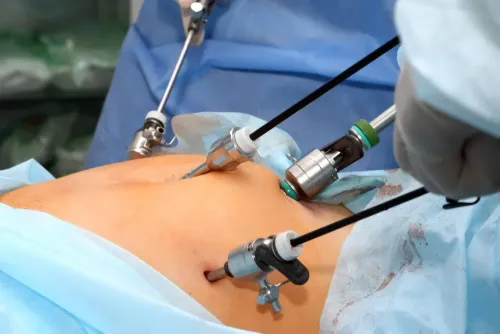
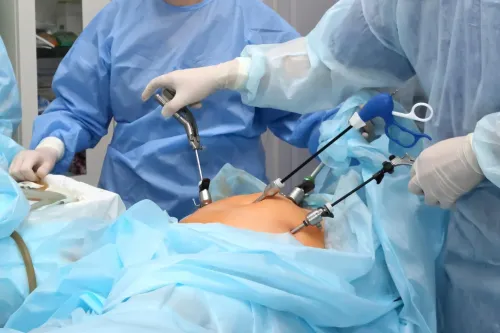
Endometriosis Surgery Endometriosis surgery is typically performed via laparoscopy, a minimally invasive procedure where a surgeon makes small abdominal incisions to... View service → |
What are your own complication rates and the realistic chance of pain relief?
Ask for the surgeon’s own outcomes for the proposed operation, not the hospital’s general figures. During surgical consent, request rates for endometriosis surgery complications: urinary-tract injury or retention, bowel leak or fistula, infection, haemorrhage or transfusion, conversion to open surgery, readmission, persistent pain and reoperation risk.
Ask how disease location and operative complexity change your risk, and what can happen to the bowel, bladder, ureters, ovaries and nearby nerves.
Ask these questions directly:
- “What proportion of patients still have pain afterward, and what would we do then?”
- “Could adenomyosis, pelvic-floor dysfunction, bladder or bowel pain syndromes, adhesions, or central sensitisation explain part of my pain?”
- “Should treatment for one of those contributors begin before surgery?”
- “What is the anaesthetic plan, likely hospital stay and after-hours contact?”
- “Which warning signs after discharge require urgent assessment?”
Surgery may not resolve persistent pelvic pain when another pain mechanism is active. Compare the proposed benefit with the operation’s likely burden:
| Outcome | What to ask | Why it matters |
|---|---|---|
| Pain relief | What proportion improve, partly improve or remain in pain? | Endometriosis removal is not a guaranteed cure. |
| Complications | What are your rates for each listed complication? | Your risk depends on disease location and complexity. |
| Further treatment | What happens if pain persists? | You may need medication, physiotherapy, pain care or reoperation. |
What will recovery and long-term follow-up include?
A written recovery plan should state when you can resume activity, work, driving and intercourse, what bowel or bladder changes to expect, which medicines to take, and the date of review.
Ask:
- What tissue will be sent for histological examination, and when will I receive the result? Histology after endometriosis surgery matters because visual appearance alone is not the final diagnosis.
- How will you measure symptom improvement, and which symptoms might need separate treatment?
- What happens if pathology differs from expectations, and when would another operation be considered?
- If I am not trying to conceive immediately, could postoperative hormonal treatment reduce pain recurrence? It does not remove existing disease, is unsuitable while actively trying to conceive, and is not guaranteed prevention, so include it in the long-term plan.
- How do fertility attempts, IVF or further ovarian treatment fit into the timeline?
Take your imaging reports, medication history, operative records and symptom diary. These documents help the surgeon create a location-specific recovery plan and explain how endometriosis follow-up will work.
Request named team members, written risks and a clear alternative if surgery is deferred. Ask how ovarian reserve and treatment timing will be handled after ovarian surgery, particularly after bilateral or repeat procedures.
Frequently asked questions
What confirms that surgery is appropriate for my symptoms?
Ask which symptoms, examination findings and suspected disease pattern support surgery, and what benefit the operation is expected to provide.
What will happen if surgical findings differ from my scan?
Ask how the team will assess unexpected disease, whether the planned procedure will change, and which decisions require your prior consent.
How do I assess a surgeon’s experience with my disease and fertility plans?
Ask about experience treating disease in your specific location, the procedures performed, fertility-preserving priorities and access to specialist support.
What should I ask about complications and pain relief?
Request the surgeon’s own complication rates for the planned procedure and a realistic explanation of the chance, limits and timing of pain relief.
What will recovery and long-term follow-up include?
Ask about hospital stay, return to work, restrictions, warning signs, medication, review appointments and what happens if pain or fertility problems continue.