
The best treatment is not determined by a scan result or pain score alone. You need to weigh the symptom causing the greatest limitation, the organs involved, your response to previous treatment, and whether pregnancy is a current or future goal.
Key takeaways
- Choose treatment around your main problem, not scan stage alone.
- Medication can control pain without removing endometriosis lesions.
- Discuss fertility plans before delaying treatment or scheduling surgery.
- Deep or bowel disease needs coordinated specialist surgical planning.
Which treatment path fits your main problem?
The right first path depends on the problem you need solved, not simply on an endometriosis stage shown on a scan.
| Main problem | First discussion | Important next question |
|---|---|---|
| Pain controlled by medication | Expectant management with symptom review | Does pain, function, or fertility planning change over time? |
| Persistent endometriosis pain | Compare anti-inflammatory medication, hormonal suppression, and surgery | Which option offers benefit without unnecessary operative risk? |
| Heavy periods or painful periods | Continuous combined oral contraception, a progestogen, or a levonorgestrel intrauterine system when pregnancy is not currently desired | Are bleeding control, contraception, and future fertility all addressed? |
| Bowel or bladder symptoms | Assess for bowel, bladder, or ureter involvement | Is this organ involvement rather than menstrual discomfort alone? |
| Infertility | Begin fertility evaluation without delaying for routine pain treatment | What do age, ovarian reserve, tubal patency, semen analysis, infertility duration, prior pregnancy, and endometriosis anatomy show? |
If infertility is the priority, discuss the time you can spend trying to conceive before assisted reproduction. Surgery may suit selected findings, but disease stage alone should not decide between surgery, IVF, or another fertility treatment.
An incidental scan finding does not automatically require an operation. Ask whether it changes pain control, organ safety, fertility planning, or cancer evaluation before agreeing to surgery.
Pain severity cannot reliably show disease extent. Small superficial lesions can cause severe symptoms, while extensive disease can produce few symptoms, so rASRM stage should inform the decision—not dictate it.
How does the extent and location of disease change your options?
Location changes what must be protected and whether surgery is likely to help. The visible amount also does not predict pain: small lesions can cause severe symptoms, while extensive disease can cause little discomfort.
| Location | Planning problem |
|---|---|
| Superficial peritoneal endometriosis | Often remains invisible on imaging; treatment depends on symptoms and goals. |
| Endometrioma | Ovarian surgery can reduce recurrence and pain but remove healthy tissue and lower ovarian reserve. |
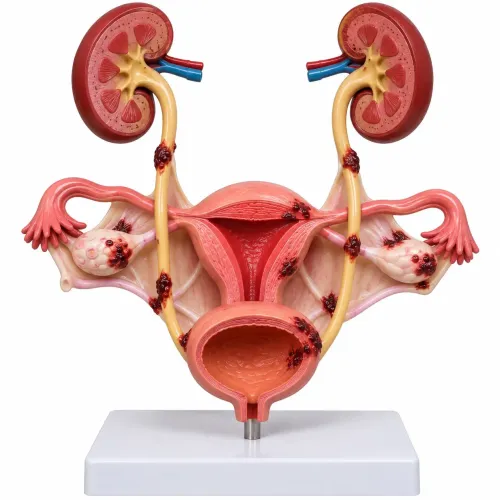
| Deep infiltrating endometriosis | Requires mapping before surgery, especially near the bowel, bladder, or ureter. |
| Adhesions | Can distort anatomy and make organ injury or incomplete treatment more likely. |
| Bowel or ureteric disease | Needs organ-specific counselling and access to colorectal or urological expertise. |
An expert transvaginal ultrasound can identify many endometriomas and map deep disease. MRI provides a wider map when bowel, bladder, or ureter involvement is suspected. A normal examination, ultrasound, or MRI cannot rule out superficial peritoneal endometriosis.
Ureteric disease deserves particular attention because it can obstruct kidney drainage without prominent symptoms. Laparoscopy becomes a diagnostic or treatment option when direct inspection is needed, imaging is negative but symptoms persist, or empirical treatment is unsuitable, unsuccessful, or unacceptable.
Before agreeing to an invasive test or operation, ask:
- Which findings are confirmed, and which are suspected?
- Would each finding change treatment, fertility planning, or organ protection?
- What bowel or urinary-tract complications are possible, and what expertise is available at the centre?
What can medication do, and when is surgery unnecessary?
Expectant management means monitoring symptoms, scan findings, ovarian reserve, and fertility plans when immediate intervention offers no clear advantage. It is an active review plan, not neglect; worsening pain, enlarging lesions, or a changing fertility timeline can alter the decision.
1. NSAIDs for endometriosis, including ibuprofen, may reduce pain but do not remove implants. Before using them, review stomach-ulcer and bleeding risk, kidney disease, cardiovascular disease, other medicines, and pregnancy-related restrictions with a clinician.
2. Combined oral contraceptives can be taken continuously when avoiding withdrawal bleeding is helpful. Progestogens suppress endometriosis-associated pain, and a levonorgestrel-releasing intrauterine system is useful when heavy uterine bleeding is also a concern.
3. Hormonal treatment controls disease activity and symptoms; it does not permanently remove established lesions. GnRH agonists and GnRH antagonists are generally second-line options because hot flushes, vaginal dryness, mood effects, and bone mineral loss can occur. Add-back therapy is used during many longer courses to reduce these effects and protect bone.
Surgery is a poor first choice when medication controls symptoms, no fertility-related objective requires an operation, operative risk is high, or treating a lesion would not change the plan. If surgery is chosen for pain, consider postoperative hormonal suppression when pregnancy is not being pursued, because pain or disease can recur.
How should fertility goals change the timing of treatment?
If you are trying to conceive now, plan pain treatment and fertility treatment together. The decision depends on age, ovarian reserve, tubal patency, semen analysis, previous pregnancy, infertility duration, endometriosis anatomy, and the time you can reasonably spend trying before assisted reproduction.
1. Ask whether surgery addresses a clear fertility or pain problem. Surgery may help selected people, but rASRM stage alone should not determine it. IVF or another fertility treatment may be preferable instead of surgery or after it.
2. If pregnancy is planned later, hormonal suppression can control symptoms while preserving a future decision point. It does not improve fertility while you take it, so review when to stop treatment and begin trying.
3. Treat endometrioma surgery as an ovarian-reserve decision. Cystectomy reduces recurrence and pain more effectively than drainage and coagulation, but it can remove healthy ovarian tissue and lower anti-Müllerian hormone. Discuss this risk before consent.
4. Do not remove an endometrioma solely to improve IVF live-birth rates. Significant pain, suspicious features, difficult follicle access, or another individualized indication can change the balance.
5. If future pregnancy matters, discuss fertility preservation according to ovarian reserve and timing. It is not a universal rule against ovarian surgery; delaying necessary treatment also has costs.
Reassess the plan if symptoms, scans, ovarian reserve, or the time available for trying changes. That prevents endometriosis and infertility from being managed as unrelated problems.
When does complex disease justify specialist surgical planning?
Complex disease justifies specialist surgical planning when imaging suggests deep endometriosis involving the bowel, bladder, or ureteric endometriosis; adhesions distort pelvic anatomy; pain persists despite suitable medical treatment; or surgery could affect ovarian reserve, fertility, or organ function. A multidisciplinary endometriosis care team can coordinate decisions across organs.
| Finding | Why planning is complex | Support to discuss |
|---|---|---|
| Deep bowel or bladder disease | Resection or repair may be needed | Colorectal or urological input |
| Ureteric endometriosis | Kidney drainage can be threatened without obvious symptoms | Urological assessment and renal protection |
| Dense adhesions | Normal anatomy and organ boundaries may be obscured | Advanced surgical mapping and contingency planning |
| Possible ovarian surgery | Healthy ovarian tissue and reserve may be lost | Fertility counselling before consent |
Before deep endometriosis surgery, ask the team to explain the intended procedure, alternatives, the expertise available, and what happens if operative findings differ from the scan. A specialist service, including an Endometriosis Surgeon in Pune when you are seeking care there, can coordinate this assessment instead of treating each organ in isolation.
Hysterectomy for endometriosis is reserved for selected people who have completed childbearing and still have symptoms despite conservative options. It is not a guaranteed cure: disease outside the uterus and other pain mechanisms can remain.
Removing the ovaries causes surgical menopause, so it needs separate long-term counselling and is not a routine way to prevent recurrence. If the ovaries remain and pregnancy is not being pursued, ongoing hormonal suppression is commonly considered.
Ask for a written plan stating:
- The symptom being treated
- The evidence for disease extent
- The fertility consequence
- Follow-up if symptoms recur
Related services
Endometriosis & Fertility Endometriosis and Fertility: Expert Insights from Pune Leading Endometriosis Surgeon Endometriosis is a complex and often misunderstood condition... View service → |
Endometriosis Surgery Endometriosis surgery is typically performed via laparoscopy, a minimally invasive procedure where a surgeon makes small abdominal incisions to... View service → |
Frequently asked questions
Which endometriosis treatment path fits your main problem?
Choose the path based on whether your priority is pain relief, managing bleeding, protecting fertility, or treating an organ affected by disease.
How does disease extent and location change endometriosis treatment options?
Disease near the ovary, bowel, bladder, ureter, or deep pelvic nerves can require different imaging, medication, and surgical planning than superficial disease.
What can medication do, and when is surgery unnecessary?
Medication can reduce inflammation, suppress menstrual cycling, and control pain. Surgery is not necessary when symptoms respond well and there is no urgent organ damage or fertility-related reason to operate.
How should fertility goals change the timing of endometriosis treatment?
Tell your clinician whether you want pregnancy soon, later, or not at all because that choice affects medication use, ovarian surgery decisions, and referral timing.
When does complex endometriosis justify specialist surgical planning?
Seek specialist planning when scans or symptoms suggest deep disease involving the bowel, bladder, ureter, ovaries, or multiple pelvic structures.
Related services
Endometriosis & Pain Endometriosis Pain : Causes, Effects, and Treatment options Endometriosis is a common but often misunderstood condition affecting millions of women... View service → |
Bowel Endometriosis Endometriosis and Irritable Bowel Syndrome: Understanding the Double Struggle. View service → |
Adenomyosis Adenomyosis Understanding Adenomyosis - A Comprehensive Guide Adenomyosis is a condition that affects many women, yet it remains relatively unfamiliar to a... |
Urinary tract Endometriosis (UTE) occurs when endometrial-like tissue grows on or within the organs of the urinary tract. View service → |