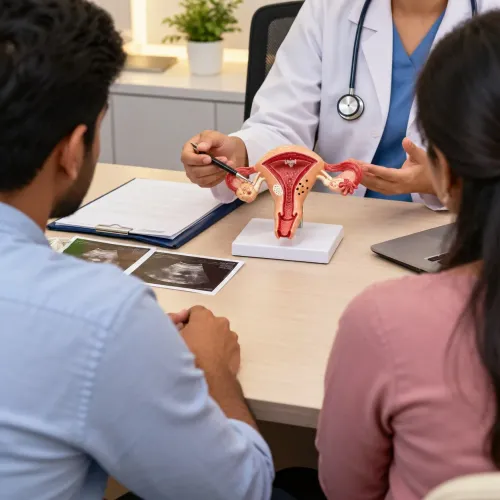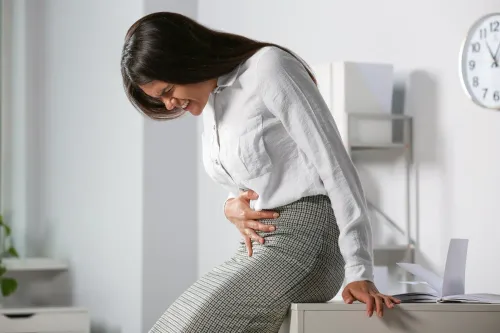

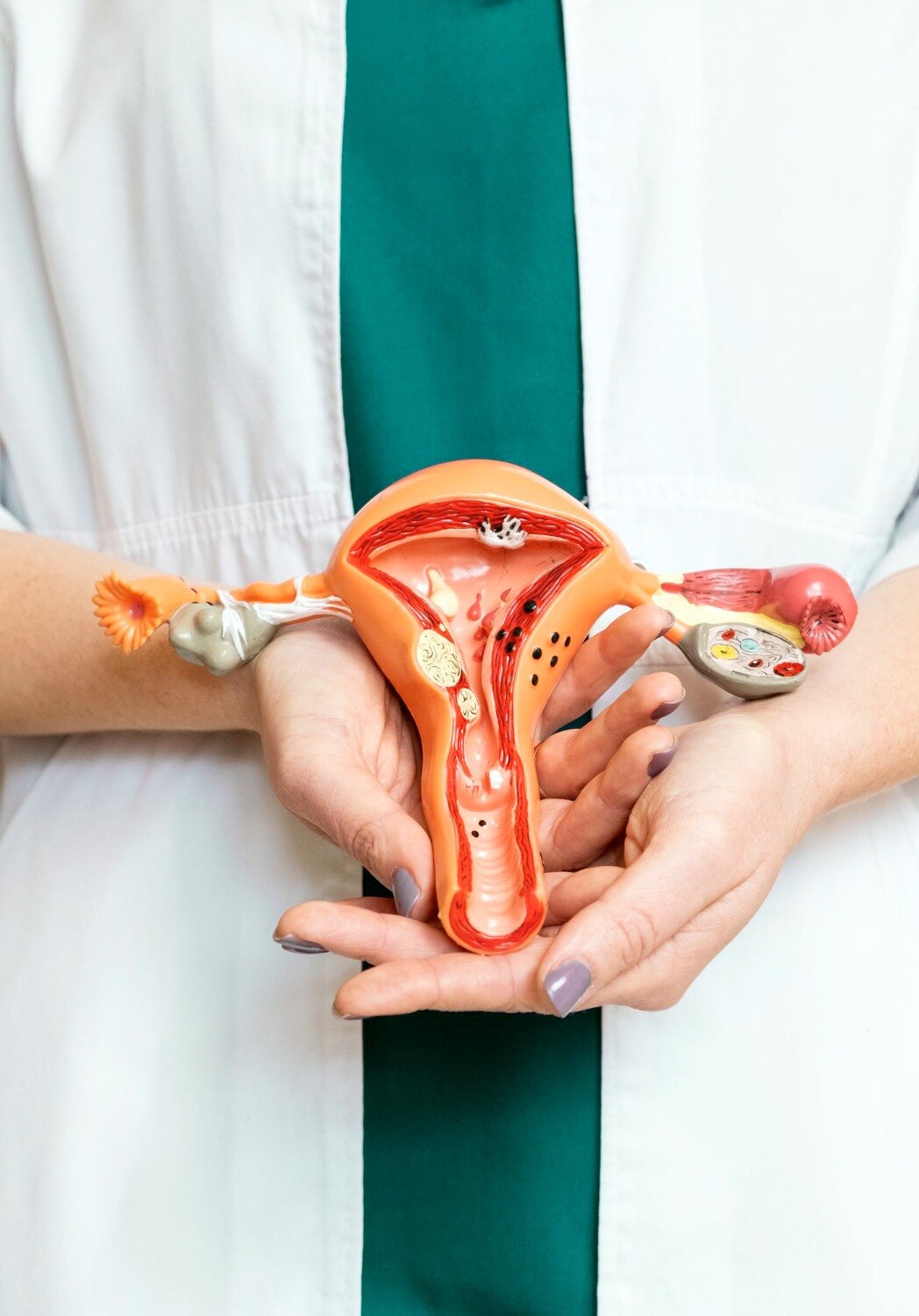
No proven medication, diet, supplement, or lifestyle plan reliably stops endometriosis from developing. You can still use known risk markers, recognise warning patterns sooner, and seek assessment before persistent pain, organ involvement, or fertility concerns complicate decisions.
Key takeaways
- No proven diet, supplement or medicine prevents endometriosis.
- Family history and early, severe period pain raise suspicion.
- Persistent pelvic pain, painful sex or infertility warrants assessment.
- Track symptoms and seek care when pain disrupts daily life.
Can Endometriosis Be Prevented?
No proven method prevents endometriosis from developing. Its causes remain uncertain, and proposed mechanisms include retrograde menstruation, inherited susceptibility, immune factors and hormone exposure. These explanations do not support a reliable preventive diet, supplement or medication.
Prevention is different from actions that reduce harm after disease begins:
- Risk reduction means addressing a changeable exposure when evidence supports it; it does not guarantee that endometriosis will not develop.
- Early diagnosis means investigating significant symptoms before years of untreated pain, organ involvement or fertility problems accumulate.
- Symptom control means reducing pain and bleeding with appropriate medication or hormonal treatment; relief does not prove that lesions have disappeared.
- Treatment means managing confirmed disease, including surgery when its benefits outweigh its risks.
Pregnancy is not a prevention strategy or a cure. Symptoms can ease during pregnancy or breastfeeding as hormone levels change, but endometriosis can persist or return afterward.
Recognised risk markers are not personal failures or practical prevention targets. They include a first-degree relative with endometriosis, early menarche, short cycles, heavy or prolonged bleeding, nulliparity and obstructed menstrual flow. Having one does not make disease inevitable; it should lower your threshold for assessment when symptoms appear.
Routine screening without symptoms is not recommended. CA-125 is not a suitable screening test, and no blood test has enough accuracy for population screening. Severe, worsening or function-limiting period pain deserves early diagnosis rather than endurance.
Which Risk Factors Raise the Chance of Endometriosis?
A first-degree relative with endometriosis is a meaningful risk marker, but it does not make the condition inevitable. Other recognised endometriosis risk factors include early menarche, short menstrual cycles, heavy or prolonged bleeding, nulliparity, and obstructed menstrual flow. These are associations found in research, not proof that any one feature causes disease.
| Factor | What the association means | Personal control |
|---|---|---|
| First-degree relative | Inherited susceptibility may cluster in families | None |
| Early menarche | More lifetime menstrual exposure is associated with risk | None |
| Short menstrual cycles | More frequent menstruation is associated with risk | Usually none |
| Heavy or prolonged bleeding | Greater menstrual flow is associated with risk | Not reliably preventable |
| Nulliparity | Having no prior birth appears in risk research | Not a medical failure |
| Obstructed menstrual flow | Blocked outflow is linked with pelvic menstrual backflow | Depends on the condition |
The leading theory, retrograde menstruation, proposes that menstrual blood travels through the fallopian tubes into the pelvis. This is common, yet most people with it do not develop clinically significant endometriosis, so it cannot explain risk by itself. Researchers also study genetic susceptibility, immune-system differences, and hormone-responsive tissue.
These factors are not evidence that you caused the disease. Family history should lower your threshold for assessment if you have deep pain during sex, cyclical bowel or urinary pain, chronic pelvic pain, or difficulty conceiving. Pregnancy is not a dependable prevention strategy.
Do Lifestyle Changes or Hormonal Contraception Prevent Endometriosis?
No diet, supplement, or daily routine has been proven to prevent endometriosis. Research on diet and endometriosis does not support a specific avoidance plan.
These measures support health or symptom coping, but they do not reliably stop lesions from developing:
- Exercise can improve fitness and help some people manage pain.
- Adequate sleep can reduce the burden of persistent pain and fatigue.
- Stress management can support coping, but stress is not a proven cause to “fix.”
- Smoking avoidance protects general health, but it is not established as endometriosis prevention.
Hormonal contraception is symptom control, not proven primary prevention. Combined pills can reduce ovulation, bleeding, and pain, while progestins suppress endometrial activity and often reduce symptoms. Hormonal intrauterine devices can lessen menstrual bleeding and pelvic pain, but they do not remove established lesions.
Hormonal treatment after surgery can reduce recurrence risk; that result does not prove prevention of new disease. Symptoms can return after stopping treatment, and the choice depends on side effects, medical contraindications, and fertility plans.
Do not use pregnancy as a prevention strategy. Symptoms may ease during pregnancy or breastfeeding because of hormonal changes, while endometriosis can persist or return afterward. Seek assessment when severe, worsening, or function-limiting pain continues despite treatment.
Which Symptoms Should Prompt Early Assessment?
Pain that is severe, worsening, or disruptive deserves assessment rather than endurance. Ordinary menstrual discomfort is usually manageable, short-lived, and does not repeatedly stop you from attending school, work, exercising, or sleeping.
| Pattern | More consistent with | What to do |
|---|---|---|
| Mild cramps that improve within one or two days | Ordinary menstrual discomfort | Track them and mention changes at routine care |
| Severe period pain, pain that is worsening, or pain that limits normal activities | Endometriosis or another pelvic disorder | Book a medical appointment |
| Pain that persists between periods or returns every cycle outside bleeding | Chronic pelvic pain or endometriosis | Arrange assessment |
| Deep pain with sex | Possible endometriosis, pelvic floor pain, or another pelvic condition | Report its location and timing |
| Painful bowel movements or bowel pain that follows your cycle | Possible bowel-related endometriosis or another gastrointestinal condition | Seek assessment |
| Cyclical urinary symptoms, such as pain or blood when passing urine | Possible urinary-tract involvement or another bladder condition | Arrange prompt review |
| Difficulty conceiving | A fertility-related pelvic problem, including endometriosis | Discuss evaluation |
Make an appointment if pain remains inadequately controlled after an appropriate trial of non-steroidal anti-inflammatory medicine or hormonal treatment. Symptoms can be mild or absent even when disease is extensive, so pain intensity does not measure lesion extent.
Bring a record showing cycle dates, pain score and location, bleeding, bowel or bladder changes, pain with sex, medicines tried, missed activities, and any first-degree family history. This pattern helps clinicians distinguish endometriosis from irritable bowel syndrome, urinary conditions, pelvic floor pain, and ordinary dysmenorrhea.
How Are Persistent Symptoms Investigated and Managed?
Persistent symptoms deserve a structured review, not a single test. Your clinician will ask about cycle timing, pain with sex or bowel movements, urinary symptoms, bleeding, fertility plans, previous operations, family history, and response to medicines. A normal pelvic examination does not exclude superficial disease.
Expect the investigation to be chosen around your symptoms and decisions you may need to make:
- Transvaginal ultrasound is usually the first imaging test. It can identify an endometrioma, ovarian cysts, or deep disease, but a normal scan cannot rule out endometriosis.
- MRI for endometriosis helps map deep disease involving the bowel, bladder, ureters, or pelvic nerves when ultrasound is unclear or surgery requires detailed planning.
- Empirical treatment, usually hormonal suppression with pain relief, treats symptoms without confirming the diagnosis. Review the response and side effects; it is not suitable when you are actively trying to conceive.
- Laparoscopy remains an option when imaging is negative or inconclusive, symptoms persist, or confirming the diagnosis would change management. It allows treatment during the same operation, but carries risks such as adhesions, organ injury, and reduced ovarian reserve.
- Endometrioma surgery needs particular caution, especially when cysts affect both ovaries or fertility is important, because removing ovarian tissue can reduce reserve and recurrence remains possible.
Specialist planning helps when deep or organ-related disease is suspected. An Endometriosis Surgeon in Pune can coordinate imaging, fertility priorities, and multidisciplinary input before weighing symptom benefit against surgical harm.
Related service
Endometriosis Prevention How to Prevent Endometriosis? From Awareness to Action! The prevention of a disease refers to the various measures and actions taken to avert or... View service → |
Frequently asked questions
Can endometriosis be prevented?
No proven method prevents endometriosis. Its causes remain uncertain, so no diet, supplement or medication reliably stops it from developing.
Which risk factors raise the chance of endometriosis?
A family history of endometriosis, early or heavy periods, short menstrual cycles and severe period pain can raise suspicion and justify assessment.
Do lifestyle changes or hormonal contraception prevent endometriosis?
Lifestyle changes may support general health but do not prevent endometriosis. Hormonal contraception can reduce pain and bleeding, but it is not proven to prevent the condition.
Which symptoms should prompt early assessment?
Seek assessment for pelvic pain that disrupts daily life, severe period pain, pain during sex, painful bowel movements or urination during periods, or difficulty becoming pregnant.
How are persistent symptoms investigated and managed?
A clinician reviews your symptoms, menstrual history and examination findings, then may use ultrasound or MRI. Management can include pain relief, hormonal treatment and surgery when symptoms or disease severity require it.